
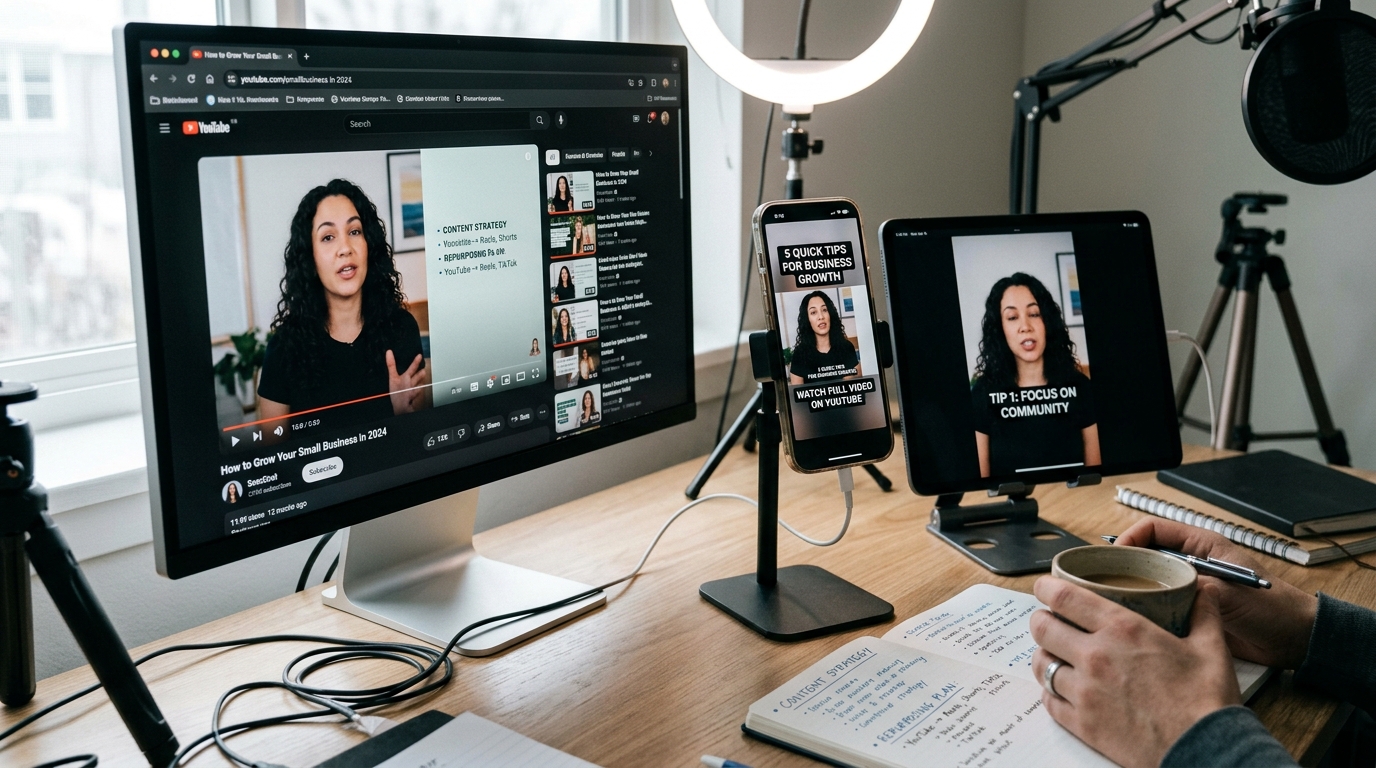
1. Start With Your Best Long-Form Content
Choose content that contains strong ideas. Look for surprising statements, strong opinions, useful tips, and practical advice.
2. Find Standalone Moments
The best short-form clips can be understood without watching the full video. A viewer should quickly understand what is happening and why they should care.
3. Rewrite the Beginning When Necessary
A long-form video may spend 20 seconds building context. A short video often needs that context compressed. The core idea stays the same, but the opening becomes more direct.
4. Create a Clear Hook
A useful short-form structure is: Hook → Value → Example → Conclusion → CTA. The hook should introduce the reason to continue watching.
5. Reframe for Vertical Video
A horizontal video cannot always be cropped directly into a good vertical video. You may need to reposition the speaker, use alternate footage, or rebuild the composition.
6. Add Captions and Visual Emphasis
Short-form content often benefits from clear captions and visual emphasis. Highlight important words rather than animating every word.
7. Do Not Publish Every Clip
More content is not automatically better content. Choose the strongest clips. A smaller number of useful videos can be more valuable than publishing every sentence.
Final Thoughts
A professional video editing workflow helps you move from raw footage to a finished video in a more organized way while reducing mistakes, unnecessary revisions, and wasted time. Good editing is about making better decisions in the right order.